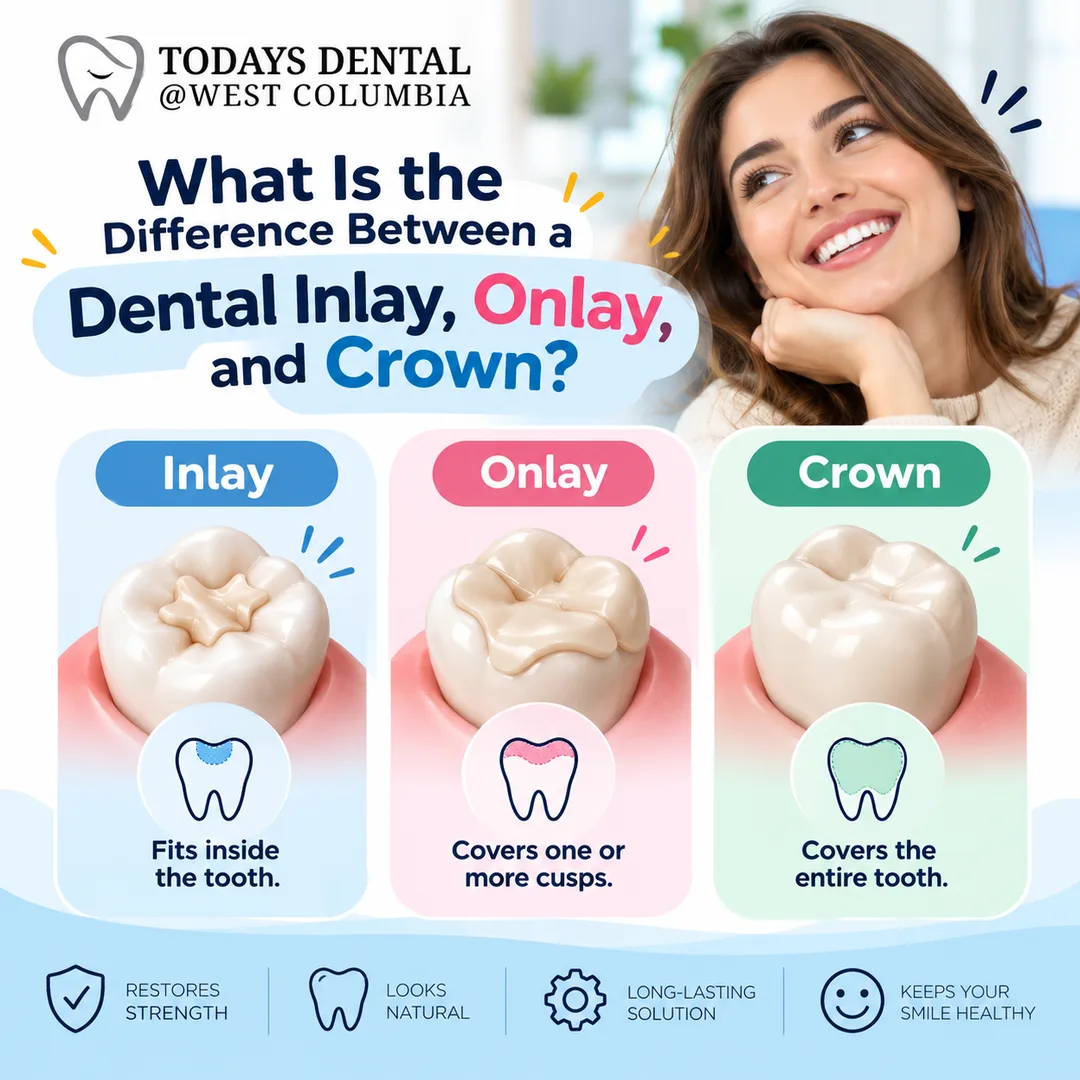
Many people wake up with a toothache or find a large filling that keeps breaking. They then wonder which fix fits best. Dental Restorations can mean inlays, onlays, or crowns. That choice feels confusing and costly to most patients.
One quick fact helps cut the fog, inlays and onlays repair parts of a tooth, while a crown covers the whole tooth.
A dental inlay fits into the grooves of a back tooth. It restores decay that a filling cannot handle. Dentists craft inlays from porcelain, gold, or composite resin at a dental lab. The piece bonds to the tooth to strengthen tooth structure and stop cavity growth.
This dental restoration leaves the cusps intact, so it acts like a precise filling and a conservative partial crown. Patients get cavity treatment with a natural look and durable dental materials.
Onlays cover one or more cusps of a tooth. Dentists call them partial crowns. They sit between a filling and a full crown. The dentist removes decay and shapes the tooth. Then the lab makes the onlay from porcelain, gold, or composite.
One clinician who placed more than 300 onlays reports strong fits and good bite comfort. Many patients prefer onlays to large fillings because they save healthy tooth structure. This dental restoration treats cavities that extend into the chewing surface. It also helps when decay makes a filling unstable.
The procedure usually needs two visits. The first visit takes impressions and places temporarily. The lab fabricates the final piece in days. The second visit bonds the onlay with strong dental cement.
Onlays can last about 10 to 15 years with proper care. They add strength to a damaged tooth and improve appearance. This option works well for cavity treatment and cosmetic dentistry.
Next comes the dental crown, which covers the entire tooth and offers other treatment options.
A dental crown fits over a broken or decayed tooth like a protective cap. Dentists use crowns for large cavities that fillings cannot fix. Labs make crowns from porcelain, metal, or zirconia. This prosthodontic dentistry option restores tooth structure, chewing power, and smile shape.
Dentists prepare the tooth, take an impression, and place a temporary cap. A permanent crown arrives in one to two weeks, then the dentist bonds it with dental cement. Crowns serve as partial crown restorations after root canals and for severe tooth decay. Patients get a long-term dental restoration that looks natural and feels strong.
A dental inlay is a type of filling used to restore a tooth's shape and strength. It fits inside the tooth, covering damage or decay without extending over the edges.
An onlay covers more surface area than an inlay. It extends beyond the cusps of the tooth, providing extra support for larger areas of decay or damage.
Crowns cover the entire tooth like a cap. They are used when there’s significant damage or after root canal treatment, offering complete protection and restoring function.
Choosing between an inlay, onlay, or crown depends on how much of your tooth needs repair. Your dentist will guide you based on your specific situation and needs; they’ll help find what works best for you!
Tell us a little about what you need — we'll be in touch shortly.
115 Medical Cir, West Columbia, SC 29169, USA

Hi! I'm Tooth fairy! Your AI Assistant Ask me anything