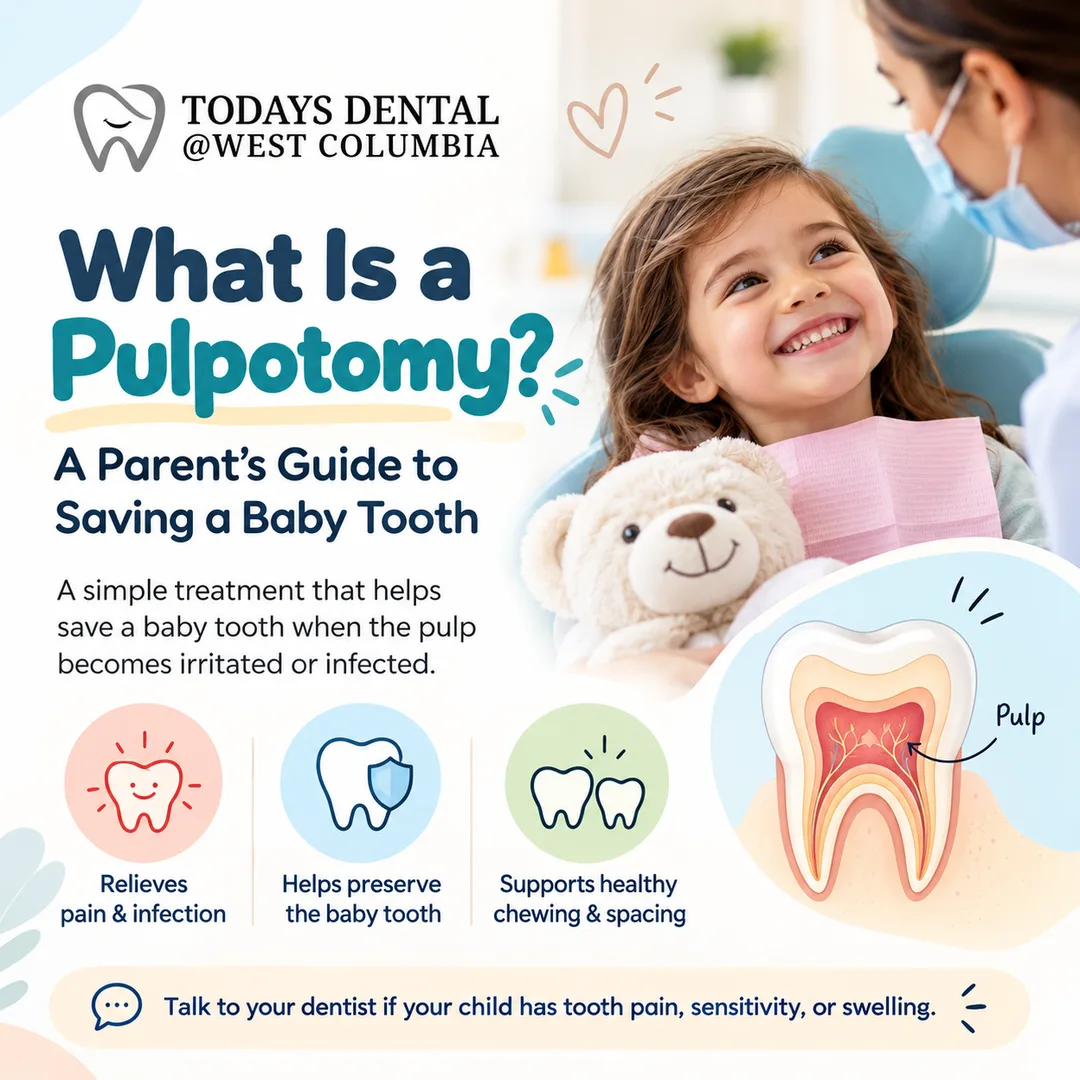
Many parents worry when a child has a toothache or a big cavity in a baby tooth. They want to save the tooth but fear a root canal or tooth extraction. Here you will know what a pulpotomy is and how it can save your baby’s tooth.
A pulpotomy is a dental procedure that removes diseased pulp tissue while keeping the healthy parts of the tooth. Pediatric dentistry often uses it for primary teeth with deep tooth decay to avoid extraction and help with restoration.
Tooth decay can harm a child's baby teeth. When decay reaches the pulp, parents might consider a pulpotomy as a solution. This dental procedure removes diseased pulp while saving healthy parts of the tooth. In cases of infection or inflammation, it helps preserve oral health and prevents tooth extraction.
A child may need a pulpotomy if they experience severe toothache or dental trauma. Pediatric dentistry often uses this treatment to combat advanced cavities that threaten the innermost layer of the tooth.
Parents can expect their child's dentist to remove infected pulp tissue from the affected tooth and apply medicated material for protection. A pulpotomy acts like a baby root canal, ensuring that children keep their baby teeth for as long as possible.
The pulpotomy process starts with the dentist numbing the area around the affected tooth. This procedure removes infected or damaged pulp tissue from a child's baby tooth. The dentist opens the crown of the tooth and accesses the pulp chamber; they then take out any diseased tissue.
After this, a medicated material is placed in the chamber to protect what remains of the tooth. This step ensures that healthy parts remain intact.
Parents can expect their child to feel some pressure but typically not pain during a pulpotomy. The dentist will use local anesthesia to make sure your child is comfortable throughout this dental procedure.
Pulp treatment aims to treat inflammation or infection, securing oral health for years to come. Following the procedure, children may experience mild discomfort, which can be managed with over-the-counter medications as needed.
Restorative dentistry plays an essential role in helping maintain healthy baby teeth until they naturally fall out for permanent ones.
A pulpotomy is a dental procedure. It is a pulp treatment that removes sick pulp tissue in a baby tooth. The dentist cleans the area and places a medicated filling and a cap to restore the tooth. This helps avoid tooth extraction.
Dentists pick a pulpotomy when baby teeth have deep tooth decay or an infection that reached the pulp but left the roots healthy. They may choose this instead of a root canal or full tooth extraction. It is a common cavity treatment in pediatric dentistry.
The pulpotomy stops pain and removes infected pulp tissue. It keeps the primary tooth for chewing and guides the adult tooth. This helps overall dental health and simple home oral care.
The dentist gives local anesthesia. They remove the diseased pulp tissue in the crown of the tooth. They place a medicated material and a restoration, often a crown or cap. The work uses restorative dentistry steps and follows pediatric dentistry standards.
No, recovery is usually easy. Children feel better in a day or two. Parents follow the dentist’s oral care tips and any medicine. Call the dentist if toothache, fever, or swelling comes back.
Yes, it can fail if infection returns. Then the child may need an endodontic procedure or tooth extraction. A pediatric dentist or endodontics specialist will advise the next step.
Tell us a little about what you need — we'll be in touch shortly.
115 Medical Cir, West Columbia, SC 29169, USA

Hi! I'm Tooth fairy! Your AI Assistant Ask me anything