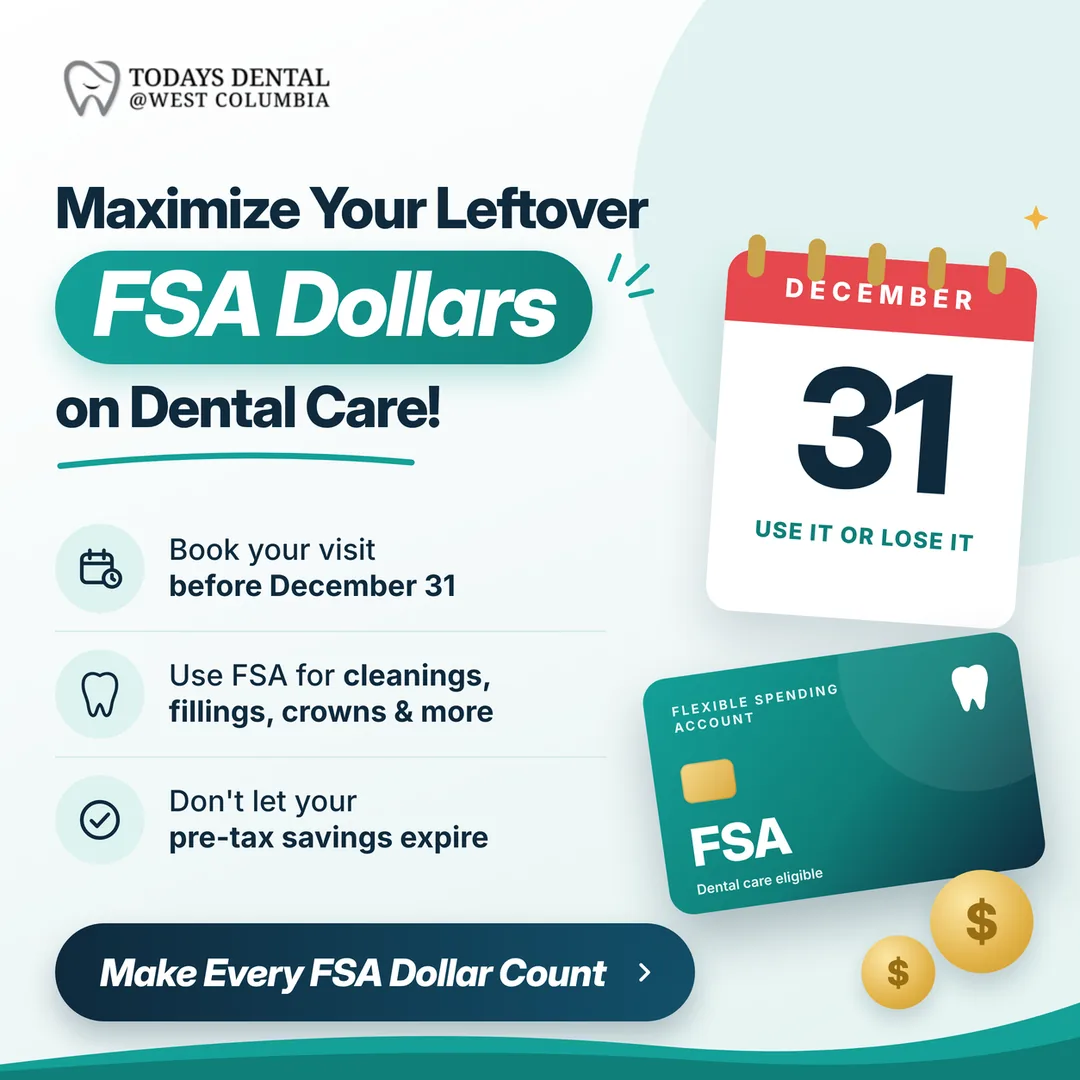
Dental teams often see a year-end rush as patients check their FSA balance. Some plans require patients to spend those funds by year-end, while others allow extra time. Each plan sets its own rules.
FSA funds may cover eligible out-of-pocket dental costs. Individual dental insurance plans have separate coverage rules, so patients should check both plans before booking.
Eligible dental treatments can help individuals use their FSA funds wisely. Many people don’t realize that the money can cover quite a few services, making it easier to smile big this year.
Patients may be able to use FSA funds for routine cleanings and exams. These visits help spot small problems before they need more care. FSA rules can vary, so patients should check their plan’s details before booking.
A routine visit also supports dental benefits by helping patients keep track of their oral health. If an exam finds decay or damage, fillings, crowns, or bridges may be the next step.
Fillings, crowns, and bridges may qualify for FSA funds if they treat a dental problem. A filling can repair a cavity. A crown can cover a damaged tooth, while a bridge can replace a missing tooth. Cosmetic work may not qualify, so the person should check the plan rules before booking.
A common dental visit can reveal that a small cavity needs a filling, or that a damaged tooth needs a crown. The person can ask the dental office for a cost estimate and confirm coverage with the FSA plan. That step can help avoid a bill that catches them off guard.
After fillings, crowns, and bridges, braces may also qualify for FSA funds. Some plans cover clear aligners as well, but rules vary. Orthodontic care can last for months or years. Patients should check their plan’s rules and ask the orthodontic office about payment dates before booking treatment.
Gum disease requires attention. Regular cleanings can prevent or even reverse early stages of this issue. Dentists perform scaling and root planning for those with more advanced gum problems. This treatment removes plaque and tartar below the gum line, allowing healthy tissue to regenerate.
Patients may also need antibiotics to fight infection in severe cases. Some individuals opt for laser therapy as a less invasive option. Maintaining good oral hygiene at home is essential after these treatments, too; brushing and flossing regularly will help keep gums healthy long-term.
Night guards and mouth-guards protect teeth from grinding. Many people clench their jaws at night, but a night guard can help prevent damage. This custom-fit device cushions the teeth and reduces wear.
Mouth-guards serve as shields during sports activities. They safeguard against injuries to teeth, gums, and jaws. Athletes should consider wearing them for added protection during games or practice sessions.
Time is running out to use those FSA dollars. People can still fit in some dental treatments before the year ends. Here are some tips for scheduling last-minute appointments.
Utilizing these tips will help people navigate scheduling effectively while making the most of their remaining FSA funds this year.
Maximizing FSA dollars can feel overwhelming. Luckily, a few simple steps make the process easier.
Taking these steps maximizes FSA dollars, eases appointment scheduling, and ultimately improves dental health before year-end deadlines approach.
You can often use FSA funds for dental exams, cleanings, fillings, crowns, and root canals. Cosmetic treatments, such as teeth whitening, usually do not qualify. Check your plan’s rules before booking.
Usually, the treatment must happen by your plan’s deadline. Booking an appointment before year-end may not be enough. Call your FSA provider if you are unsure.
Many plans cover eligible orthodontic care, but rules vary. Ask your FSA provider how it handles braces and payment plans. A quick call can save you a surprise bill.
Some plans offer a grace period or let you carry over part of your balance. Others follow a use-it-or-lose-it rule. Check your plan soon, then schedule eligible dental care while appointments are still available.
Tell us a little about what you need — we'll be in touch shortly.
115 Medical Cir, West Columbia, SC 29169, USA
Hi! I'm Tooth fairy! Your AI Assistant Ask me anything